Living Room Lighting Layout: A Practical Room-by-Room Planning Method

A living room can have six ceiling lights and still be too dark for reading. Another might have only three lamps yet feel comfortable from morning until bedtime. The difference usually comes down to placement, direction and control rather than the number of fixtures.
An effective living room lighting layout starts with the furniture and the activities happening around it. From there, you can distribute general, task and accent lighting across the space, choose appropriate brightness and give each layer enough flexibility to work independently.
Start With What the Living Room Needs to Do
Before choosing fixtures, draw a simple floor plan. Include the sofa, chairs, television, windows, doorways and electrical outlets. You don’t need design software; a sheet of paper is enough.
The goal is to identify where light will be useful rather than where a fixture might look symmetrical on the ceiling.
Identify the Main Activities
Most living rooms serve several purposes. Someone might watch television from the sofa, read in an armchair, work occasionally at the coffee table and entertain friends on weekends.
Each activity has different lighting requirements.
Watching television benefits from subdued, indirect light that avoids screen reflections. Reading needs a brighter source directed toward the page. Conversation works well with soft illumination around the seating area, while cleaning requires stronger overall brightness.
Write down the activities that actually happen in your room. If nobody uses the living room as a workspace, there’s no reason to design elaborate desk lighting.
Map the Furniture Before Placing Fixtures
Mark the main seating positions and circulation routes on your plan. Then identify the areas that need dedicated light.
Pay attention to what happens when someone is seated. A ceiling fixture directly behind a chair may cast a shadow across a book, while a bright downlight above the sofa can create uncomfortable glare.
Also consider furniture that might move. A floor lamp can follow a relocated armchair; a recessed ceiling fixture cannot.
A useful planning worksheet includes:
- Room dimensions: Length, width and ceiling height.
- Furniture: Sofa, chairs, tables, shelving and television.
- Activities: Reading, relaxing, entertaining and occasional work.
- Natural light: Window positions and areas affected by glare.
- Electrical constraints: Outlets, existing switches and fixed fixtures.
- Controls: Which lights should operate independently.
Test the plan against an ordinary evening. Can someone read without illuminating the entire room? Is there enough light to reach the hallway when the television is on? Those questions often reveal more than a perfectly symmetrical lighting diagram.
Build the Three Layers of Living Room Lighting
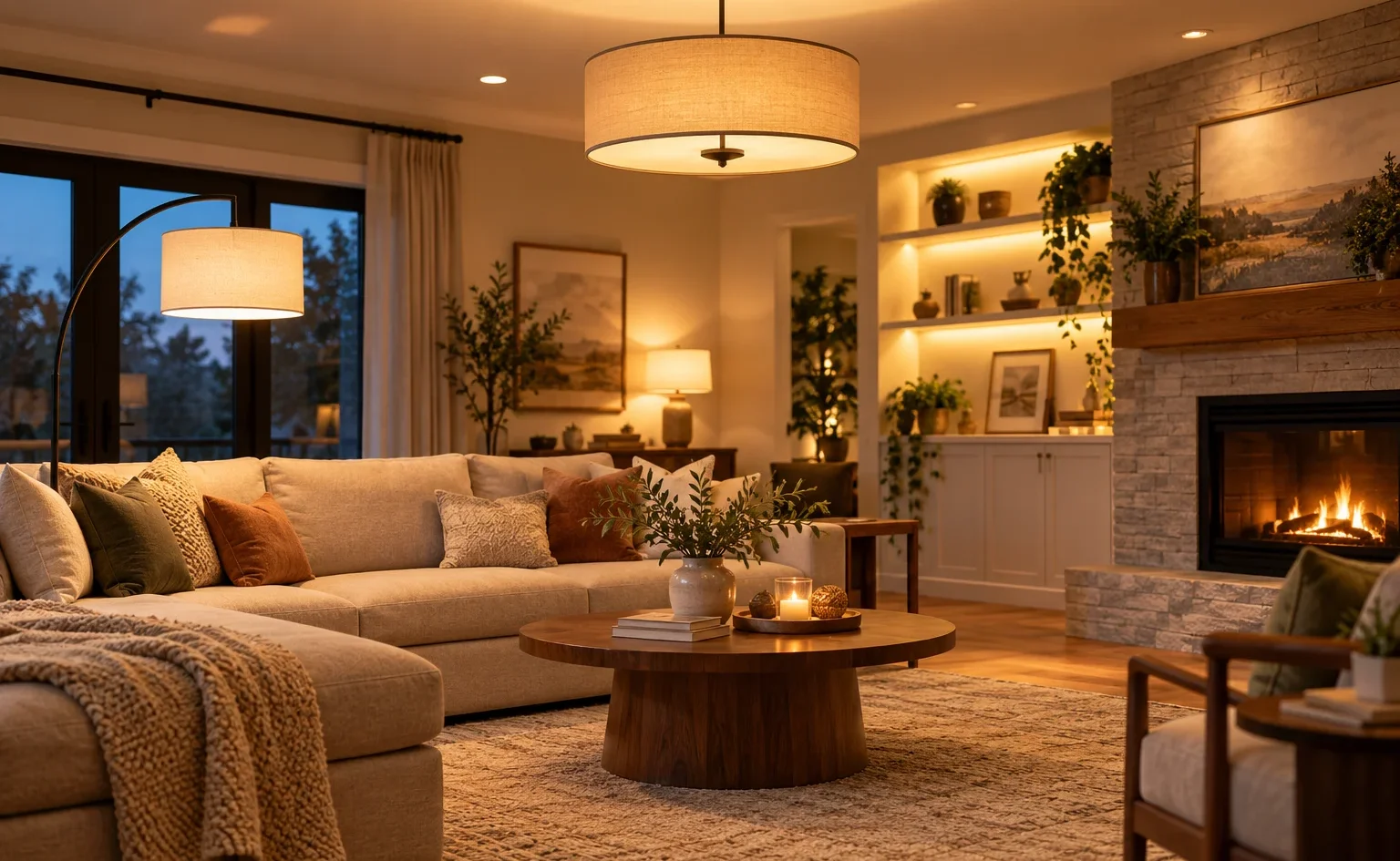
A well-balanced living room typically combines ambient, task and accent lighting. Each layer performs a different function, and together they give the space flexibility.
Natural Resources Canada’s Home Lighting Design Guide also identifies decorative lighting as a distinct layer. In practice, decorative fixtures can contribute to one or more of the three functional layers.
Ambient Lighting for Moving Around the Room
Ambient lighting provides the general illumination needed to navigate the space and recognize objects comfortably.
It can come from ceiling fixtures, recessed pot lights, wall sconces or upward-facing floor lamps. The best choice depends on the room’s shape and the surfaces available to reflect light.
An uplighter can distribute light gently across a pale ceiling. A flush-mount fixture may suit a low-ceiling room, while recessed lights can provide general illumination without visually dominating the space.
Avoid assuming ambient lighting must come from the ceiling. In older homes and rental apartments, several properly positioned portable lamps can create a useful general lighting layer.
Task Lighting for Reading and Everyday Activities
Task lighting puts extra illumination exactly where someone needs it.
A shaded table lamp beside the sofa may be sufficient for casual reading. An adjustable floor lamp or swing-arm sconce works better when the user needs to direct the beam onto a book, knitting or detailed work.
Position the light so it reaches the task without shining into the reader’s eyes. For a right-handed person writing at a table, placing the lamp toward the left can help reduce shadows from the writing hand.
Age and individual vision needs also matter. Some people need brighter, more carefully directed light to read comfortably, even when the room’s general lighting seems adequate.
Accent Lighting for Depth and Atmosphere
Accent lighting highlights a feature rather than illuminating the entire room.
A picture light above artwork, an adjustable spotlight on shelving or a subtle wash of light across a textured wall adds visual depth.
This is particularly useful in rooms where everything otherwise receives light from a single overhead direction.
Accent lighting should remain secondary. Illuminating a bookshelf beautifully won’t compensate for a sofa that lacks usable reading light.
Work Out How Much Light the Room Needs
The most useful starting point is to estimate the room’s brightness requirements, then distribute the light among several fixtures.
Lumens measure the visible light emitted by a source. Lux measures the illumination reaching a surface: one lux equals one lumen per square metre. Foot-candles express the same concept using square feet.
One foot-candle equals approximately 10.76 lux.
These measurements are related, but they aren’t interchangeable in a real room. A bulb producing 1,000 lumens doesn’t necessarily deliver 1,000 lumens to the floor or coffee table. Light is absorbed, redirected and distributed by fixtures and surrounding surfaces.
A Worked Example for a 180-Square-Foot Living Room
Consider a living room measuring 12 × 15 ft, approximately 3.7 × 4.6 m.
Its floor area is 180 square feet, or about 16.7 square metres.
Using 15 foot-candles as an illustrative general-lighting target:
180 sq ft × 15 foot-candles = 2,700 lumens
This is a simplified starting estimate, not a guarantee that 2,700 rated lumens will produce 15 foot-candles throughout the room. It assumes an idealized distribution of light and doesn’t account for fixture losses, room geometry or surface reflectance.
You might initially distribute that amount as follows:
- Floor uplighter: approximately 1,200 lumens.
- Shaded table lamp: approximately 800 lumens.
- Second portable lamp: approximately 700 lumens.
The rated output totals 2,700 lumens, but the resulting illumination will vary considerably depending on the fixtures and their placement.
A separate reading lamp may still be necessary if the seating area needs more focused light.
For renovation projects requiring accurate results, a lighting designer can calculate illumination using actual fixture photometric data rather than relying on this simplified approach.
How Ceiling Height and Room Finishes Change the Result
The same bulbs can perform differently in two equally sized rooms.
Light-coloured walls and ceilings reflect more light into the occupied space. Dark paint, heavy fabrics and matte finishes absorb more of it.
Ceiling height also matters. A fixture mounted farther from the surfaces it illuminates may produce lower local illuminance, although the result depends on its beam pattern and how light reflects around the room.
An uplighter beneath a pale eight-foot ceiling may create an effective ambient layer. In a room with a high, dark ceiling, more directional wall or task lighting could be useful.
Window placement introduces another variable. A bright room in summer may need considerably more artificial lighting during shorter winter days, particularly where neighbouring buildings restrict daylight.
Why Several Fixtures Work Better Than One Powerful Bulb
A single powerful ceiling fixture often produces an uneven experience: strong light near the centre and darker areas around the edges.
Several appropriately positioned sources distribute illumination more usefully.
The Canadian Centre for Occupational Health and Safety recommends considering indirect lighting, local task lights and multiple lower-intensity fixtures when managing glare and uneven illumination in work environments. The same principles provide practical guidance for residential lighting.
A floor lamp can illuminate the room generally, a table lamp can support reading, and a small accent source can prevent the far wall from disappearing into darkness.
The total lumen output matters, but where that light falls matters just as much.
Choose the Right Fixtures for the Layout
A fixture should earn its place by solving a lighting problem. Appearance is still important, but a beautiful pendant that shines into everyone’s eyes isn’t particularly useful.
| Fixture | Best use | Main limitation |
|---|---|---|
| Recessed lights | General illumination and wall washing | Placement and glare require planning |
| Floor lamps | Flexible ambient or task lighting | Need suitable floor space |
| Table lamps | Seated activities and soft light | Depend on furniture and outlets |
| Wall sconces | Side lighting and visual depth | Hardwired versions need installation |
| Track lighting | Adjustable directional lighting | Can look visually busy |
| Pendants | Defined seating or activity zones | Need suitable ceiling height |
When Recessed Lights Make Sense
Recessed lights, commonly called pot lights in Canada, are useful when ceiling space is limited or a room needs discreet general illumination.
Their placement shouldn’t follow a universal rule such as installing one fixture every few feet. Beam angle, ceiling height, furniture and the desired lighting effect all influence spacing.
A narrow-beam downlight can create distinct bright spots. A wider beam may produce more even coverage, depending on the fixture’s output and mounting height.
If the room contains artwork or textured walls, carefully aimed fixtures can provide wall washing as well as general light.
Recessed lighting is less successful when an excessive number of fixtures creates glare or when downlights illuminate empty floor space instead of useful areas.
When Portable Lamps Are the Better Choice
Portable lamps offer flexibility that permanently installed fixtures cannot.
They make particular sense in rental properties, small condos and rooms where furniture arrangements change.
A shaded floor lamp can provide indirect general light, while an adjustable reading lamp adds brightness precisely where required.
Portable fixtures also allow experimentation. You can move a lamp, try another bulb or change its shade before committing to a permanent layout.
If an existing living room already has adequate general illumination, adding one carefully positioned task lamp may be more useful than installing several new pot lights.
Four Living Room Layouts and How to Light Them
Room shape changes the relationship between fixtures, furniture and natural light. The following examples illustrate how to approach common layouts.
Small Condo Living Room
Imagine a living room approximately 10 × 12 ft, with a sofa against one wall, a television opposite and windows at the far end.
Limited floor space makes oversized fixtures impractical.
A sensible starting arrangement uses a compact uplighter near the sofa, a reading lamp beside the main seat and a small accent light on a shelf or media console.
If ceiling lighting already exists, dimming it may provide the general layer without needing an uplighter.
Avoid large arc lamps if their bases obstruct movement. Slim floor lamps or plug-in sconces can preserve valuable floor space.
Check the available outlets before buying anything. In a narrow room, an attractive lamp in the wrong location may create an awkward cord arrangement.
Long and Narrow Living Room
A long room often develops a brightly lit section near the entrance and a noticeably darker area toward the opposite end.
Placing every lamp along one wall makes the imbalance worse.
Instead, divide the space into functional areas along its length.
A floor lamp near one end can provide general illumination, while a shaded table lamp in the middle supports the main seating area. A third source toward the far end helps visually connect the room.
If the room includes both a sofa and reading chair, give each seating position suitable task lighting.
Wall sconces or adjustable track lights can also illuminate vertical surfaces and make the room feel less tunnel-like.
Avoid arranging recessed lights in a rigid centre line unless their beam spread and surrounding surfaces make that arrangement genuinely effective.
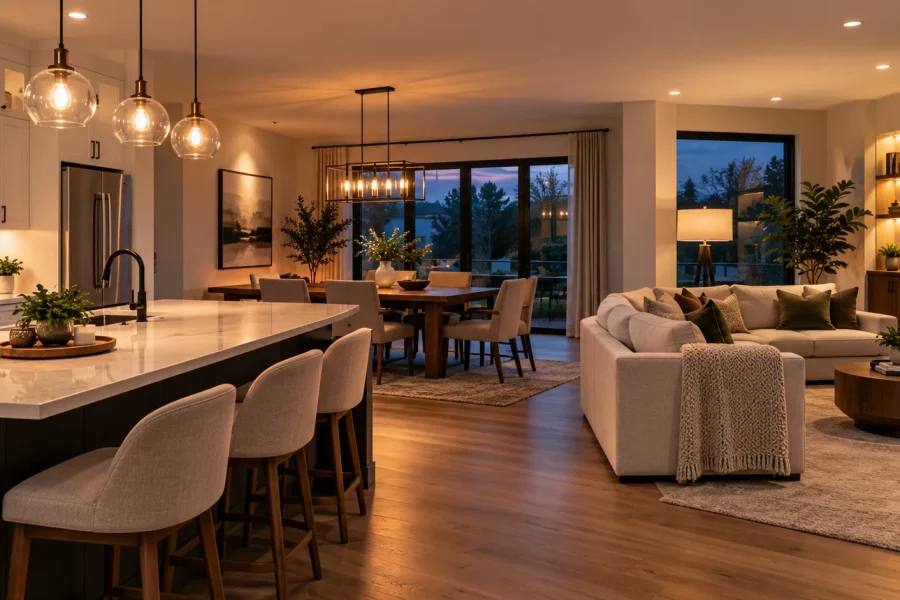
Open-Plan Living and Dining Area
An open-plan space needs different light levels for different activities.
A kitchen may require bright task lighting, the dining table may benefit from a dimmable pendant, and the living area may need softer illumination.
Instead of treating the entire space as one large room with one brightness target, establish separate lighting zones.
For example, kitchen under-cabinet lights can remain bright while the dining pendant is dimmed and the living room uses portable lamps.
The challenge is maintaining visual continuity without forcing every zone to operate identically. A practical approach to lighting different zones in an open-plan room explains how to coordinate fixtures, colour temperature and switching across adjoining spaces.
Basement Living Room With Limited Daylight
Basement living rooms present a different set of challenges: smaller windows, lower ceilings and potentially darker finishes.
A single central ceiling light may provide enough illumination to move around but leave walls and corners feeling gloomy.
Low-profile ceiling fixtures can preserve headroom, while wall washing helps brighten vertical surfaces and create a less enclosed appearance.
Where ceiling height allows, indirect lighting can soften the space. In particularly low rooms, wall-mounted or concealed lighting may be more practical than tall uplighters.
Choose shades and fixture positions that shield bright bulbs from seated eye level.
Because natural daylight may be limited even during the afternoon, consider how the room functions throughout the day rather than planning only for evening use.
Choose Colour Temperature and Colour Rendering
For most living rooms, the useful colour-temperature range is approximately 2700–3000K.
These values produce warm white light suitable for relaxing and everyday activities, but the differences between them can influence how furniture and finishes appear.
2700K or 3000K?
Choose 2700K if the room is primarily used for relaxing, conversation and evening television. It creates a warmer appearance that often complements wood finishes and soft furnishings.
Choose 3000K if you prefer a slightly cleaner white or the living room doubles as a workspace.
Neither is objectively superior. The better choice depends on how the room is used and how the light interacts with its materials.
Avoid mixing dramatically different colour temperatures across nearby fixtures unless you’re deliberately separating activities. A warm table lamp beside a distinctly cool ceiling light can make the room feel visually inconsistent.
Tunable-white lighting offers more flexibility, but it isn’t necessary for every living room.
When High CRI Makes a Difference
Colour Rendering Index describes how accurately a light source renders colours compared with a reference illuminant.
For living rooms containing artwork, colourful upholstery or carefully selected finishes, CRI 90+ bulbs are worth considering.
They can make colours appear more natural than lower-quality alternatives with similar lumen output and colour temperature.
CRI isn’t a complete measure of colour quality, however. Two LEDs with the same CRI and Kelvin rating can still render certain colours differently.
If appearance matters, try one bulb in the room before purchasing a full set. Evaluate it after dark against the actual furniture, wall colours and artwork.
Plan Lighting for TV, Reading and Evening Relaxation
A living room should be able to change character without changing its furniture.
That means creating different arrangements of light rather than expecting one fixture to handle every situation.
Keep Reflections Away From the TV
Bright ceiling fixtures and exposed bulbs can reflect on television screens, particularly when the display has a glossy finish.
Before installing additional lighting, sit in your usual viewing position and inspect the screen while it is switched off. Reflected windows and lamps are often easier to identify against the dark surface.
Try switching off individual fixtures or changing their direction.
If your main lamp appears as a reflection on the television, you can often reduce TV glare with better light placement before buying a new fixture.
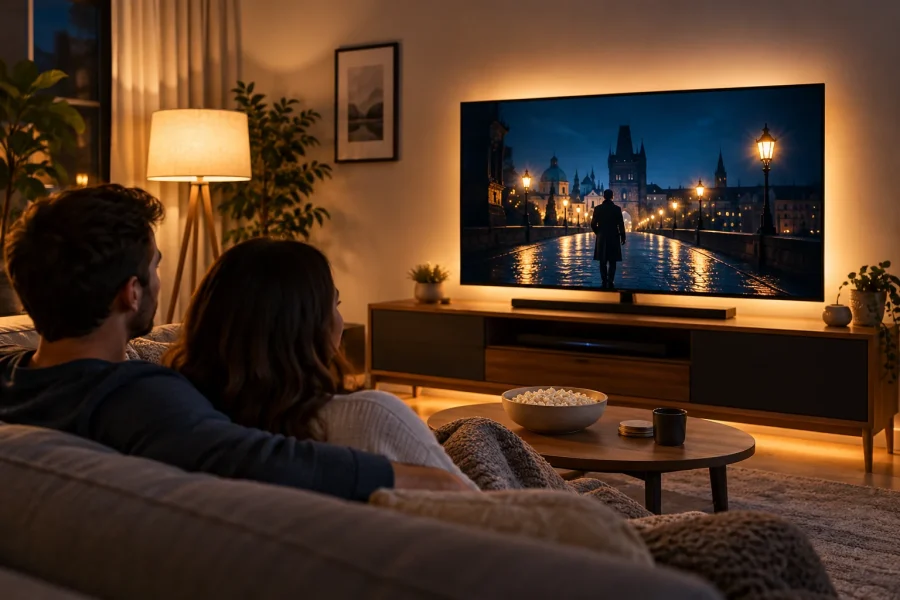
Soft indirect light behind or beside the television may be more comfortable than either a brightly illuminated room or complete darkness.
Give Reading Its Own Task Light
Reading requires focused illumination on the page.
A lamp positioned too far away may contribute to general room brightness without adequately lighting a book. A powerful exposed bulb placed too close can cause glare.
An adjustable floor lamp beside the chair is often a practical solution. Direct the light toward the reading material rather than the reader’s face.
If two people regularly read in different seats, each may need a dedicated source.
This is one reason a room with several modest fixtures can work better than one large chandelier.
Make Shared Gaming and Entertainment Areas Flexible
A living room may also contain a gaming console, computer setup or other screen-based entertainment.
Those activities can have different lighting needs from ordinary reading or conversation. Screen reflections, background brightness and the position of decorative lights all affect the viewing environment.
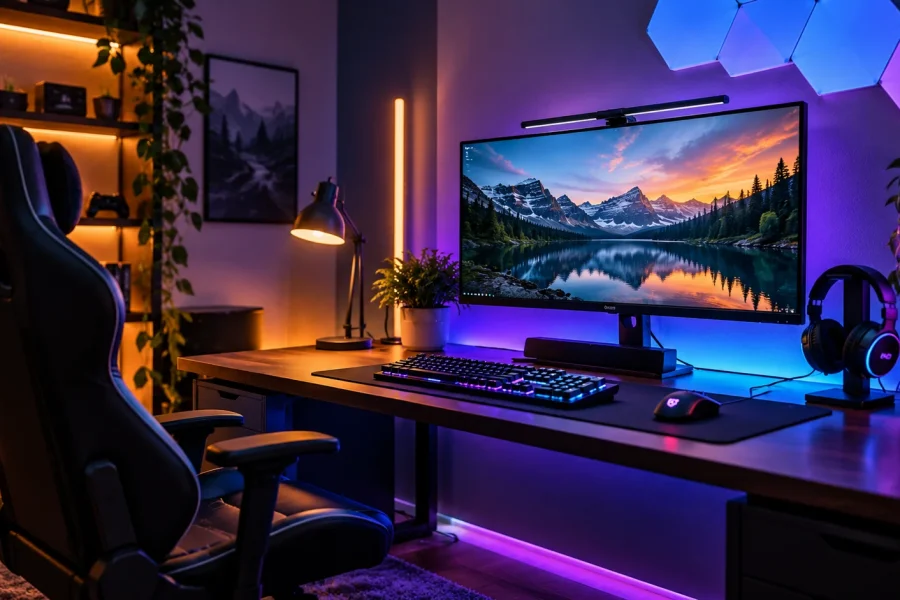
A living room that doubles as a gaming area may benefit from a separate evening arrangement. The principles of lighting a gaming space for screen comfort involve managing glare and background light before adding decorative RGB effects.
Keep functional lighting independently controlled wherever practical, so someone can use a keyboard, read instructions or move around safely without flooding the screen with light.
Use Dimmers and Separate Controls to Change the Mood
Lighting controls determine whether a well-designed room can adapt to different activities.
Separate switches let you operate ambient, task and accent lighting independently. Dimmers allow compatible fixtures to provide different levels of brightness.
Smart bulbs and switches add scheduling and preset scenes, but simple controls can achieve most everyday requirements.
Three Useful Lighting Scenes
| Scene | Ambient lighting | Task lighting | Accent lighting |
|---|---|---|---|
| Cleaning and organising | Bright | As needed | Optional |
| Reading and conversation | Moderate | Focused | Soft |
| Watching a movie | Low | Usually off | Low and indirect |
A practical control layout might put ceiling fixtures on one dimmer, wall lighting on another switch and portable lamps on independent controls.
If the room has multiple entrances, consider how people will operate the lights when entering and leaving.
Controls should feel intuitive. A complicated arrangement that requires several apps to illuminate the room is unlikely to improve everyday convenience.
What to Check Before Buying LED Dimmers
Not every LED bulb or fixture is designed to dim, and not every dimmer works well with LEDs.
Check whether the product is labelled dimmable and whether the dimmer manufacturer identifies it as compatible with the intended load.
Older dimmers designed for incandescent lighting can cause LEDs to flicker, buzz or behave unpredictably at low brightness.
Integrated LED fixtures may have additional driver and dimming requirements.
Smart bulbs introduce another consideration: many are designed to remain connected to constant power and shouldn’t be paired with conventional dimmers.
Where installation involves fixed wiring, consult a qualified electrical professional rather than treating dimmer replacement as a universal do-it-yourself project.
Plan Around Your Home and Budget
The best lighting investment depends on what you can change.
A rental apartment, an occupied older home and a house under construction offer very different opportunities.
Renting or Making Small Changes
Start with reversible improvements.
Replace poorly matched bulbs, reposition existing lamps and add focused task lighting where required.
A plug-in wall sconce, shaded floor lamp or smart plug may improve flexibility without altering the electrical system.
Not every home has a usable ceiling fixture. If you’re renting or cannot add new wiring, you can still light a room without a ceiling fixture by combining portable sources at different heights.
Check your lease before drilling or mounting fixtures. Keep cords away from walkways and avoid using extension cords as permanent wiring.
When purchasing plug-in electrical products, Health Canada advises checking for recognized Canadian certification markings, including CSA, cUL and cETL.
Renovating an Existing Living Room
Renovation creates opportunities to improve fixture placement and switching, but existing construction may limit what is practical.
Before installing recessed lighting, confirm ceiling access, insulation requirements and possible conflicts with ducts, plumbing or structural components.
Decide where switches should be located and whether different lighting layers need independent controls.
A contractor should also assess the condition and capacity of the existing electrical system before new fixtures or circuits are added.
In Ontario, businesses hired to perform residential electrical work must be Licensed Electrical Contractors, subject to the applicable regulatory framework. Other provinces and territories have their own electrical licensing and inspection requirements.
Building or Completely Remodelling
New construction offers the greatest flexibility because lighting can be planned before walls and ceilings are finished.
Coordinate fixture locations with furniture placement, HVAC equipment, ceiling details and electrical circuits.
Consider where a future sofa, television or reading chair might move. Additional flexibility in switching and outlets can make the room easier to adapt over time.
Provide the electrical contractor with a plan showing fixture types, approximate locations, control zones and any special installation requirements.
A lighting layout doesn’t need to be complicated, but resolving these decisions before finishing work is generally easier than modifying the room afterward.
Check the Layout Before You Commit
Before purchasing every fixture or approving an electrical installation, evaluate the plan from the places where people will actually sit and move.
Use this final checklist:
- Seating: Does each main seat have enough light for its intended activities?
- Circulation: Can people move safely between the room’s entrances and furniture?
- Evening use: Does the room remain comfortable when natural light disappears?
- Screens: Are bright lamps or windows reflected in the television?
- Colour consistency: Do adjacent fixtures produce compatible shades of white?
- Controls: Can general, task and accent lights operate separately?
- Glare: Are exposed bulbs shielded from normal viewing positions?
- Flexibility: Will the arrangement still work if furniture moves?
- Electrical safety: Are fixtures appropriately certified, compatible and installed?
If possible, test your lighting ideas with movable lamps before committing to permanent fixtures. A temporary arrangement can reveal whether a corner needs more illumination, whether a shade creates an unwanted shadow or whether a lamp is positioned too close to the television.
You don’t need the entire room to be equally bright. Good lighting allows each activity to have the illumination it needs while the rest of the space remains comfortable.
The strongest living room lighting layout is rarely the one with the most fixtures. It’s the one that feels natural during everyday life: bright enough for practical tasks, soft enough for relaxing and flexible enough to accommodate both without rearranging the room every evening.